
STL NEXA 2
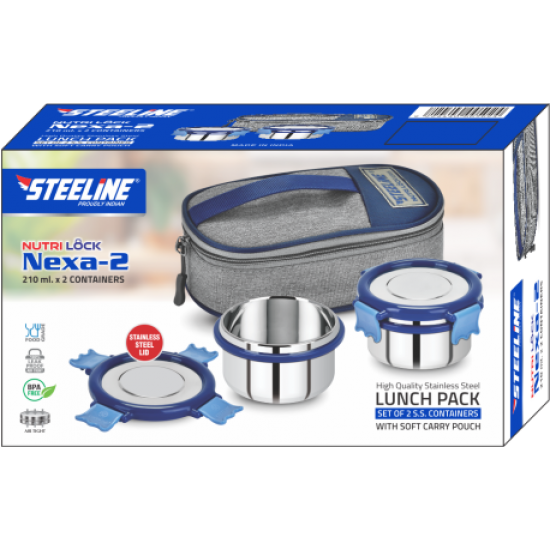


- Model: LEAKPROOF
- JAN: 350

The Nexa 2, examined piece by piece.
A full breakdown of what the Steeline Nexa 2's construction says about its durability — from steel gauge to lid mechanics — plus how it stacks up against a standard tiffin and how to keep it performing for years.
Build material
The containers are made of stainless steel, which remains the standard for lunch boxes because it doesn't absorb odours or stain from turmeric, oil, or acidic foods the way plastic does over repeated use. Steel also resists dents better than aluminium and holds up to daily wear far longer than plastic containers, which tend to warp, crack, or discolour within a year or two.
It doesn't leach chemicals into hot food either — a real advantage since tiffins are typically packed with warm curries, dal, or rice straight off the stove, conditions under which lower-grade plastics degrade faster.
Nutri-Lock container system
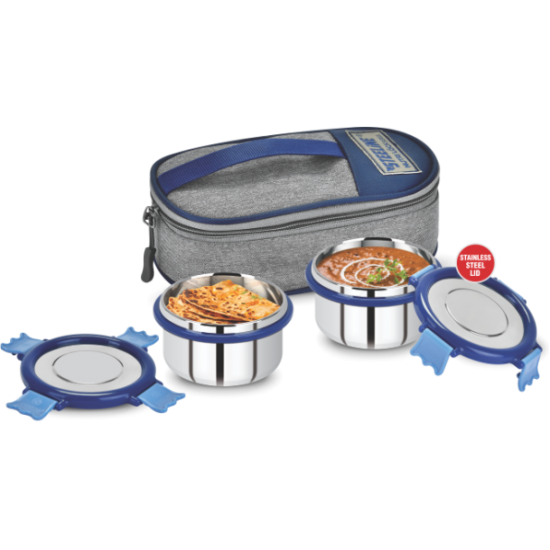
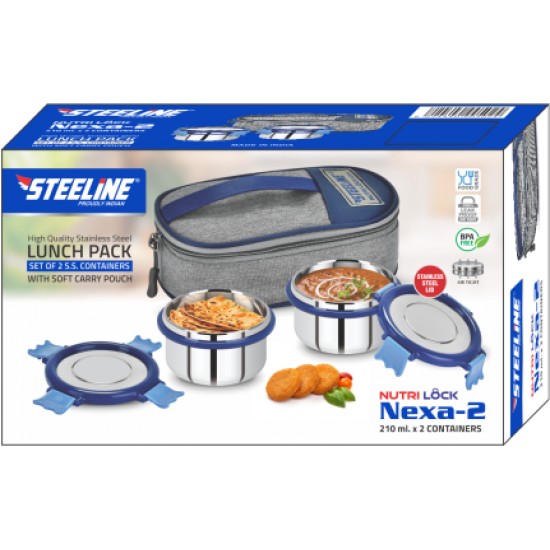
Each of the two containers holds 210ml, sized for a proper two-item meal — a sabzi or curry in one, rice, roti, or dal in the other. The Nutri-Lock naming points to a design intent of preserving nutrients and freshness by minimizing air exposure once sealed, which also helps prevent spillage and leakage in transit.
Lid quality — dual-tone, 4-side clip closure
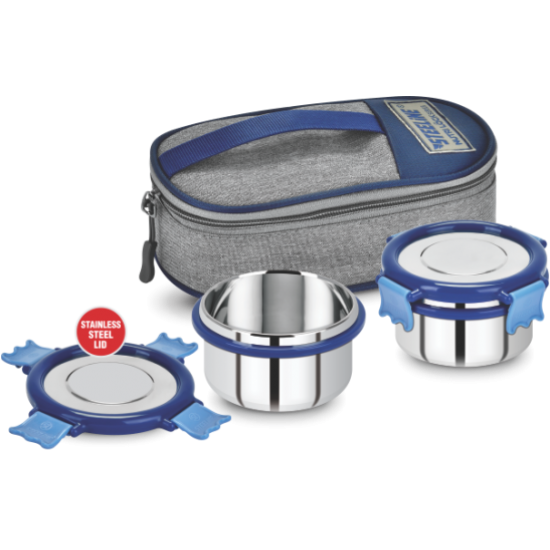
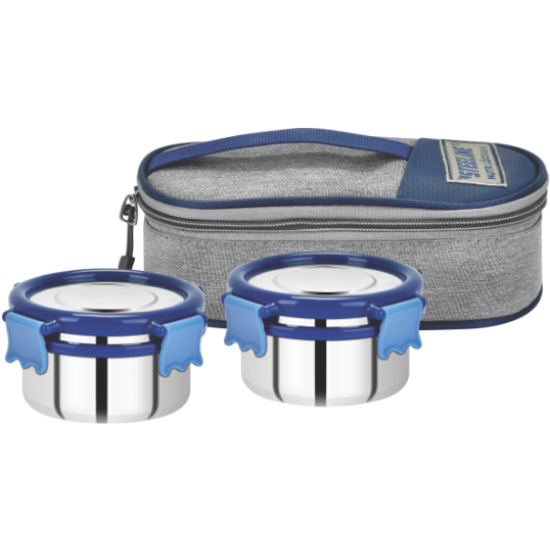
This is the standout functional detail of the set. Rather than a simple snap-on or screw lid, each container lid is secured by four separate clips positioned around the rim — front, back, and both sides — distributing sealing pressure evenly around the full circumference, rather than relying on a single latch point the way most basic tiffins do.
- Far less chance of the lid popping open in a bag if it gets jostled, tilted, or dropped
- A tighter, more even seal against leaks, especially with liquid-heavy foods like dal or gravy-based sabzi
- Each clip is detachable, making the lid easier to clean thoroughly and reducing the single-point wear-and-tear failure common with hinge-based locks
The lids are finished in a two-tone colourway — light sky blue on the top surface, navy blue around the rim and clip area. Beyond looks, this helps you visually confirm the lid is seated evenly: any twist or misalignment shows up as an uneven colour split around the edge.
Insulated pouch
The outer bag is an insulated pouch in grey and navy, built to hold its shape whether full or empty — a sign of decent internal structuring, likely a semi-rigid lining or reinforced panel rather than flimsy fabric that collapses when empty. Insulation helps maintain food temperature for longer after it leaves the kitchen, and a structured pouch also protects the steel containers from denting if the bag is tossed around in transit.
Overall quality read
Taken together, the set reads as a mid-to-upper tier tiffin. Steel construction over plastic signals durability and food-safety priority, the 4-point clip lid is a meaningfully more robust sealing mechanism than most basic tiffins offer, and the insulated pouch adds thermal retention and physical protection that cheaper sets often skip.
Packaging alone can't confirm the actual steel gauge/thickness, whether the lid clips are steel or reinforced plastic, or whether the pouch lining is genuinely insulated with a foam/thermal layer versus simply padded fabric.
Nexa 2 vs. a standard single-container tiffin
| Aspect | Nexa 2 (2-container) | Standard single-container |
|---|---|---|
| Meal structure | Separates wet and dry items — curry stays apart from rice/roti | Everything shares one compartment, items often mix or soak |
| Sealing | 4-side clip lock distributes pressure evenly | Usually one clip or screw lid — single point of failure |
| Leak resistance | Higher, due to even multi-point seal per container | Lower with gravy-based food as the clip loosens over time |
| Cleaning | Clips detach, lids and containers wash separately and fully | Fixed hinge can trap food residue and moisture |
| Portability | Slightly larger, but comes with an insulated pouch | More compact, usually no insulation layer |
| Best suited for | Full two-course meals eaten hours after packing | Single-item meals or short commutes |
Recommended care and cleaning
Stainless steel and clip-lock lids last well, but only with correct handling. The following extends both seal quality and steel finish over time.
- Hand wash preferred. The clip mechanism and any rubber gasket around the lid rim wear faster with repeated dishwasher heat cycles — hand washing with warm water and mild soap is safer.
- Detach clips before washing. Take clips off the lid periodically so food residue and moisture don't build up in the hinge points — the most common cause of a clip losing its grip.
- Dry fully before sealing. Trapped moisture inside a closed steel container is the main cause of lingering odour — air-dry container and lid separately before locking shut for storage.
- Avoid abrasive scrubbers. Steel wool or harsh scouring pads dull the finish and create micro-scratches where residue and bacteria can accumulate; a soft sponge is enough.
- Wipe the pouch, don't soak it. If the lining is foam-insulated, submerging it in water can degrade that layer — spot-clean the exterior fabric with a damp cloth instead.
- Avoid extreme heat on the lid. The dual-tone coating sits over steel or composite plastic — avoid microwaving the lid or open flame, and fill with hot rather than boiling food.
- Check the clips periodically. Seal quality depends on all four clips gripping evenly — inspect every few weeks for any that have loosened or warped, especially with daily travel.